
Artistic Work & Performances: Embodiment, Contemporary Dance & Artistic Performance
Artistic Work & Performances

My artwork and artistic performance emerge from a long-term exploration of the body, movement, presence, and human experience. Through contemporary dance, Butoh dance, ritual, interdisciplinary performance, and choreography, I explore movement as a poetic language—one that can reveal what words cannot express.
No two works are alike. I do not follow a fixed style or aesthetic; instead, each work discovers its own form, rhythm, atmosphere, and visual language. Some performances unfold through rich imagery, costumes, and theatrical composition, while others embrace simplicity, stillness, and subtle physical presence.
At the heart of my practice is embodiment: an understanding of the body as a living archive of memory, imagination, vulnerability, sensation, and transformation. I am interested not only in movement itself, but in what moves us before the body begins to move.

MUT

Artistic Research & Influences
Photo by: Gabriele Cafici
My artistic research has developed through fieldwork and encounters in Japan, India, Nepal, and Bali, where I studied traditional and contemporary dance practices alongside ritual, meditation, and body–mind disciplines. These experiences expanded my understanding of dance as both artistic expression and embodied knowledge.
My research also engages with yoga philosophy, trauma-informed somatic practices, and nervous-system awareness. This wider body–mind inquiry continues to inform my artistic performance, teaching, and choreography by creating space for awareness, agency, connection, and presence.

Choreography, Composition & Performance
I have been drawn to choreography since childhood. For more than two decades, this fascination has developed into an international artistic practice spanning Europe, Japan, and Australia through performances, collaborations, festivals, residencies, and interdisciplinary creations.
For me, choreography begins with listening rather than with a predetermined style. Each work asks for its own physical language. Whether I create for dancers, musicians, singers, actors, filmmakers, or interdisciplinary artists, I listen to the person, their body, their story, and their presence before shaping the movement.
Through improvisation, observation, dialogue, and composition, movement gradually reveals itself. My role is not to impose movement, but to create the conditions in which a distinctive physical language can emerge.
This approach has evolved into Poetry in Motion, a creative methodology developed through years of artistic research. Rooted in the meeting of poetry and embodiment, it invites each creation to emerge as an embodied poem.
Selected Performances & Festivals:
-
La Biennale di Venezia (2010), selected by and under the direction of Ismael Ivo
-
No Ballet (2014)
-
Lucky Trimmer, Berlin (2016)
-
Dance Ga Mitai Contemporary Dance Festival, Tokyo
-
Oulu Dance Festival, Finland
-
Kaunas M. K. Čiurlionis National Museum of Art, Lithuania
-
Riga International Startelpa Performance and Theatre Festival, Latvia
-
Tokyo International Performing Arts and Theatre Festival, Theater X

The Creative Process
Photo by: Gabriele Cafici
I never begin with choreography. I begin with listening.
I am not interested in dance simply for movement's sake. Through contemporary dance and artistic performance, I seek a deeper understanding of what it means to be human.
Every body carries its own history, intelligence, beauty, contradictions, and possibilities. Through breath, perception, improvisation, and the body's dialogue with space, time, objects, and other bodies, movement gradually becomes visible.
Sometimes the deepest movement is stillness. Sometimes choreography is not about adding movement, but about discovering the movement that is already there.

Teaching & Artistic Mentorship
Photo by: Hiroshima Makino
Teaching continues to be one of the greatest teachers of my own life.
After many years of leading international workshops, festivals, and intensive training programs with my former company, Motimaru Dance Company, the closing of that chapter marked a profound turning point in my life.
Today, my work has become more deeply rooted. Teaching every day and meeting many different groups each week has revealed to me the extraordinary gift, responsibility, and privilege of teaching as a daily practice. Every encounter continues to shape me, deepening not only my understanding of movement, but also my understanding of people, relationships, and myself.
Today, I no longer begin with the lesson plan I have prepared—not because I don't have one, but because I first begin by meeting the people in front of me.
The plan offers a direction; the group reveals the path.
Every group is different.
Every day is different.
Before asking,
"Where are we going today?"
I first ask:
Who is here today?
How is your energy today?
How has your body arrived today?
Only then does our journey begin.
Each class becomes a dialogue rather than a destination. Together, we discover where we can go that day according to the reality of the people in the room. I believe that learning can only unfold where there is trust, presence, curiosity, and a genuine willingness to meet one another as we are.
One of the deepest values of my teaching is that nobody remains unseen.
Whether I am working with professional performers or with people discovering movement for the first time, I strive to create a space where every person feels welcomed, recognized, and encouraged to unfold at their own pace. Every class deserves the same depth of presence, care, and artistic integrity.
Over the years, I have come to realize that my students have taught me as much as I have taught them. Every group continues to deepen my understanding—not only of movement, but of people, relationships, and what it truly means to accompany another human being in a process of growth.
Teaching has made me not only a better artist, but a better human being.
I have Assisted Yoshito Ohno in Japan and abroad for 5 years, from 2004 to 2009
When I left Japan and him, I have never left them. Never.
Experiences which shaped my path:
-
2006 Assisting Yoshito Ohno's workshop at Atelier Carolyn Carlson Theatre de La Ville, Paris, France
-
2007 Assisting Yoshito Ohno's workshop at Bologna University, for the Festival “Buon Compleanno, Maestro. Omagio a Kazuo Ohno” held at the Archeological Museum of Bologna, Italy.
-
2007 Assisting Yoshito Ohno for performance creation with Carla Fracci for Kazuo Ohno 100 Flowers Festival in Yokohama, at Roma's Opera.
-
2007 Rehearsals Assistant and participating with the Kazuo Ohno Dance Studio at the Finale of Hyakkaryouran Gala Concert, Kanagawa Prefectural Seishonen Centre to celebrate Kazuo’s centenary birthday.
-
2007 Assisting Yoshito Ohno with the performance in a multidisciplinary exhibition that celebrated the 101 years of Kazuo Ohno at Sesc Avenida Paulista, San Paulo Brazil
-
2007 Assisting Yoshito Ohno's performance "KUU" for Kazuo Ohno Festival in New York, U.S.A
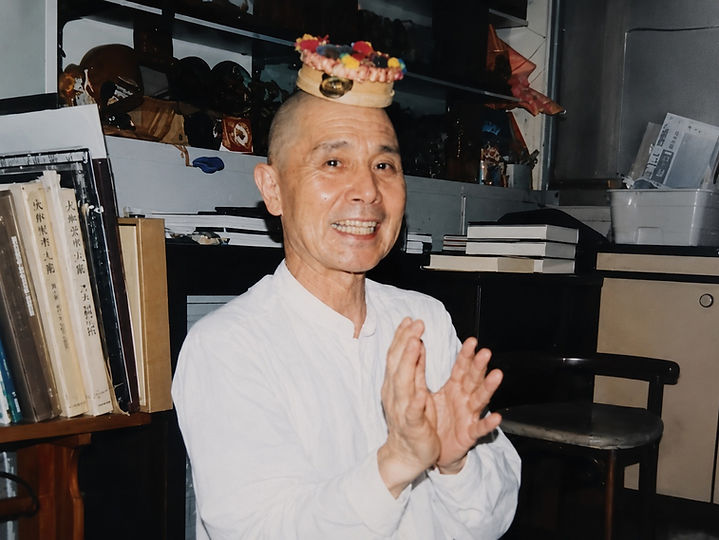
Ohno Yoshito 2005

Setsugekka with Yoshito Ohno and TizianaLongo at The Kazuo Ohno Dessin Festival, , Kushiro, Hokkaido 2007
Photo@: Azumasan

Artistic Lineage & Encounters
Photo by: Gabriele Cafici
My artistic path has been profoundly shaped by encounters with artists and teachers across cultures. A particularly formative experience was my five-year collaboration with Yoshito Ohno, through which I participated in workshops, rehearsals, performances, and artistic projects across Europe, Japan, Brazil, and the United States.
This experience deepened my understanding of artistic transmission and embodiment as a way of living and working. Encounters with other artists, including Ohad Naharin, Akira Kasai, Pina Bausch, and Marina Abramović, have continued to expand my artistic perspective.
Work With Me
I am available for artistic performance, choreography, collaborations, workshops, artistic mentorship, films, and creative projects.
If you are interested in developing a performance, commissioning artwork, collaborating on a creative project, or inviting me to teach or mentor, I would be happy to hear from you.